
20 July 2026
How High to Hang Pendant Lights Over a Kitchen Island
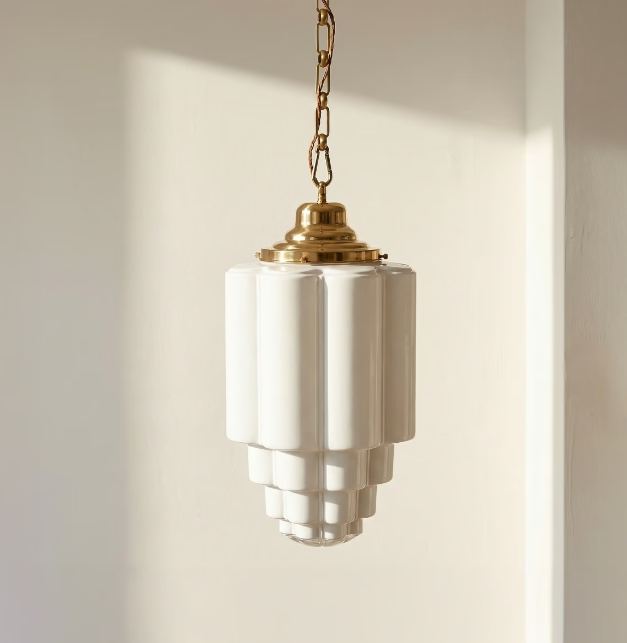
Hang the bottom of the pendant 75 to 90cm above the worktop. On a standard UK kitchen — a 90cm worktop under a 2.4m ceiling — that puts the base of the fitting somewhere between 165 and 180cm off the floor.
That is the answer. The rest of this is what to do when your kitchen is not standard, which most kitchens are not.
Why 75 to 90cm is the range
The range exists because two things are being balanced against each other. Too low and you cannot see across the island — the light sits in the middle of the conversation, and anyone working at the far side is talking to a shade. Too high and it stops lighting the worktop and starts lighting the room, which is a different job, and one your ceiling fitting already does.
Think of an island pendant as task lighting that happens to be decorative, rather than decoration that happens to give light. That framing settles most of the decisions that follow.
When to go lower
Closer to 75cm suits a small pendant, a narrow island, or an island used mainly for preparation rather than sitting. A lower hang puts more light on the surface and makes a modest fitting read as deliberate rather than lost.
When to go higher
Closer to 90cm suits an island with stools, a large or wide-shaded fitting, or a room where the island sits in a sightline from the dining table or a sofa. If people sit at the island, hang high enough that someone standing can see over the fitting to someone seated.
Adjusting for ceiling height
The 75 to 90cm figure assumes a 2.4m ceiling. Above that, add roughly 7cm of drop for every 30cm of extra ceiling height. A 3m ceiling wants the pendant around 90 to 105cm above the worktop, or the fitting looks stranded halfway to the plaster.
Below 2.4m, the honest answer is that a pendant may be the wrong fitting. At 2.2m you have very little room between the worktop and the eyeline, and a semi-flush or flush fitting will give you the same light without the compromise. Choosing the right fitting type is not a lesser answer; it is the correct one for the space.
Sloped and vaulted ceilings
Sloped ceilings are their own problem. Measure from the lowest point of the ceiling directly above the island, not from the ridge, and expect to want a longer flex than the fitting ships with. On a steep pitch, check whether the fitting has a sloped-ceiling adaptor; without one, the shade hangs at an angle rather than square to the worktop.
How many pendants, and how far apart
A rough guide by island length:
- Under 1.5m — one pendant, centred
- 1.5m to 2m — two pendants
- 2m to 2.7m — three pendants
- Over 2.7m — three pendants, or two larger ones
Islands have been getting longer, which is why this question comes up more than it used to. In Houzz's 2026 kitchen trends study, reported by Forbes, 52 per cent of homeowners upgrading an island chose one longer than seven feet — a little over 2.1m — against 18 per cent who went under six feet. The study is American, so read it as a direction of travel rather than a UK measurement, but a 2.1m island is firmly in three-pendant territory.
Spacing
Space pendants 60 to 75cm apart, measured centre to centre, and keep at least 15cm between the outermost pendant and the end of the island. Two pendants evenly spaced almost always look better than three crowded ones.
Centre the group on the island, not on the ceiling, and not on the window behind it. If the island is off-centre in the room — as islands in extensions often are — the pendants follow the island.
Getting the width right
No single pendant should be wider than about a third of the island's width. On a 90cm island that is a 30cm fitting, which is smaller than most people expect, and it is the reason so many kitchens end up with pendants that dominate the space.
If you want presence rather than restraint, use one large fitting rather than three medium ones. A single well-proportioned piece reads as deliberate. Three that are each slightly too big reads as a mistake repeated three times.
The same proportion rule governs hallways and dining rooms, with different numbers. We have set out the hallway version in what size pendant light for a hallway, and the dining version in how high to hang a chandelier over a dining table.
The mistake almost everyone makes
At 165 to 180cm from the floor, the bottom of the pendant sits at roughly adult eye height. If the bulb is exposed — an open globe, a bare filament, a shade that is open at the side — you are putting a light source directly into the eyeline of anyone standing across the island.
It looks beautiful in a photograph taken from below. It is uncomfortable to stand under for an hour cooking, and it is the single most common complaint we hear about island lighting after the work is done.
Three ways round it
- Choose a shade that conceals the bulb when viewed horizontally — a deep cone, a drum, or an opal globe.
- Fit an opal or frosted bulb rather than a clear one. This costs almost nothing and fixes most of the problem.
- Hang slightly higher than the range suggests, and accept a little less light on the surface.
If the fitting you want has an exposed lamp and you are not willing to give it up, the first two are better answers than the third.
Rise-and-fall fittings
A rise-and-fall pendant solves the height question by refusing to answer it. The counterweight lets you drop the fitting when you want light on the surface and lift it out of the way when you do not. They suit islands that do more than one job — preparation in the morning, sitting and eating in the evening.
They need slightly more ceiling clearance than a fixed drop, so check the fully raised height against your ceiling before ordering, not the hanging height.
If the island has a hob
Different rules apply. Check the minimum clearance in the hob manufacturer's instructions, which will usually be more generous than the figures here, and remember that extraction normally wants that space anyway. In most kitchens with a hob in the island, the pendants move to one side rather than sitting over it.
This is less rare than it sounds. In the same Houzz study, 15 per cent of homeowners putting an appliance in the island chose a cooktop, behind dishwashers and microwaves. If a hob is in your plan, settle the extraction first and the lighting second; doing it the other way round usually means buying the pendants twice.
How island pendants fit the rest of the kitchen
Pendants over an island are one layer, not a lighting scheme. They light the surface beneath them and very little else. A kitchen that relies on them alone has a bright island in a dim room, which reads as moody in the evening and gloomy at eight in the morning.
The usual arrangement is three layers: recessed or ceiling lights for general light, the island pendants for the work surface, and something low and warm — wall lights, or under-cabinet strips — for the end of the evening. Put them on separate switches, or on a dimmer, so the room can do more than one thing. Our guide to lighting layers covers how the three work together.
Bulbs, dimming and colour temperature
Two choices matter more than the fitting itself once it is hung.
Colour temperature. For a kitchen island, 2700K to 3000K is the warm-white band most British homes want. Anything cooler starts to read as clinical against wood and painted cabinetry, however good the fitting.
Dimming. If you want the island dimmable, check this before you order rather than after. Some fittings carry an integrated LED rather than a replaceable lamp, and those need an LED-compatible dimmer, sometimes a specific one. A dimmer bought for a filament bulb and used on an integrated LED is the usual cause of flicker and buzz.
Installation is work for a qualified electrician in any case, and it is worth telling them what you intend to dim before the first fix rather than after the plaster is on.
Before you order
Measure the drop you actually need, from the ceiling to the intended bottom of the fitting, and check it against the maximum drop listed on the product. Most pendants can be shortened easily and lengthened only with a longer flex or an extension rod.
Three measurements, in this order: worktop height, ceiling height, and island width at its narrowest. Everything else follows from those.
Common questions
How high should pendant lights hang over a kitchen island? Between 75 and 90cm above the worktop. On a 90cm worktop under a 2.4m ceiling, that is 165 to 180cm from the floor to the bottom of the fitting.
How many pendants do I need over my island? One under 1.5m, two between 1.5m and 2m, three between 2m and 2.7m. Over 2.7m, three pendants or two larger ones.
How far apart should island pendants be? 60 to 75cm centre to centre, with at least 15cm between the end pendant and the end of the island.
What size pendant suits a kitchen island? No wider than about a third of the island's width. On a 90cm island, that is roughly a 30cm shade.
Can I hang pendants over a hob in the island? Follow the hob manufacturer's minimum clearance, which takes precedence over any figure here. In most kitchens the pendants sit to one side of the hob instead.
What if my ceiling is lower than 2.4m? Consider a semi-flush or flush fitting instead. Below about 2.3m there is not enough room between the worktop and the eyeline for a pendant to work properly.
Our pendant lights are listed with their full drop and shade diameter, so you can check both against your island before ordering. If you are working to a single statement fitting instead, the chandeliers are the place to look, and the made-to-order range covers pieces built in the finish you choose. Lead time confirmed at order.