Article: The Ultimate Guide to Lighting Layers: What to Use in Every Room for the Perfect Mood
The Ultimate Guide to Lighting Layers: What to Use in Every Room for the Perfect Mood
Lighting can feel confusing at first—especially when you’re trying to make a home look stylish, warm, and practical at the same time. But the good news is this: great lighting is not about one “perfect” ceiling light. It’s about layering different types of light so your space works beautifully at every time of day.
In this ultimate guide, we’ll walk you through the basics of lighting layers and give you clear, room-by-room recommendations—so you know exactly what to use, where to place it, and why it works.
Understanding the Basics of Lighting Layers
Lighting design is all about balance. The goal is to combine different types of lighting so the room feels comfortable, looks premium, and functions well.
Here are the core layers:
Ambient Lighting (General Light):
This is your main overall light—usually a ceiling fixture. It fills the room and helps you move around safely.
Task Lighting (Focused Light):
This supports specific activities like cooking, reading, shaving, working, or applying makeup. It reduces eye strain and improves practicality.
Accent Lighting (Mood + Highlight):
This adds depth and atmosphere, highlights features (art, shelves, textures), and makes spaces feel more “designed”.
Colour Temperature (Warmth):
Warm white feels cosy. Neutral white feels fresh and functional. Choosing the right one matters as much as the fixture itself.
Now that you know the basics, here’s how to apply them to the most common rooms in a UK home.
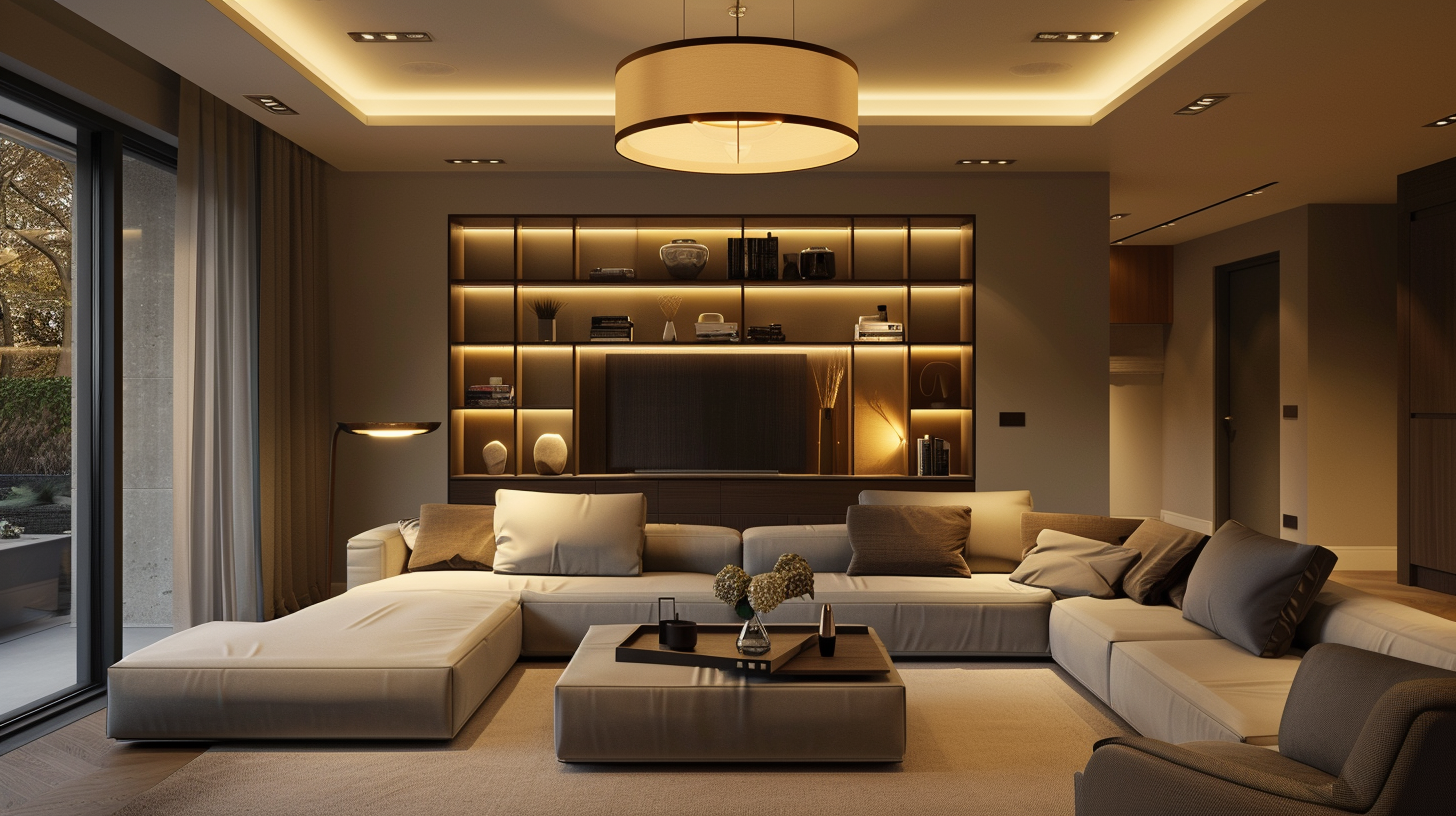
1) Lighting for the Living Room (Comfort + Atmosphere)
The living room should feel relaxing at night and bright enough during the day.
Best lighting combination:
-
Ambient: a statement pendant, chandelier, or flush ceiling light (depending on ceiling height)
-
Task: floor lamp near seating or a table lamp for reading
-
Accent: wall sconces, picture lights, or LED strips on shelves
Pro tip:
Use a dimmer on the main ceiling light and keep lamps on warm white (2700K–3000K) for a cosy evening feel.
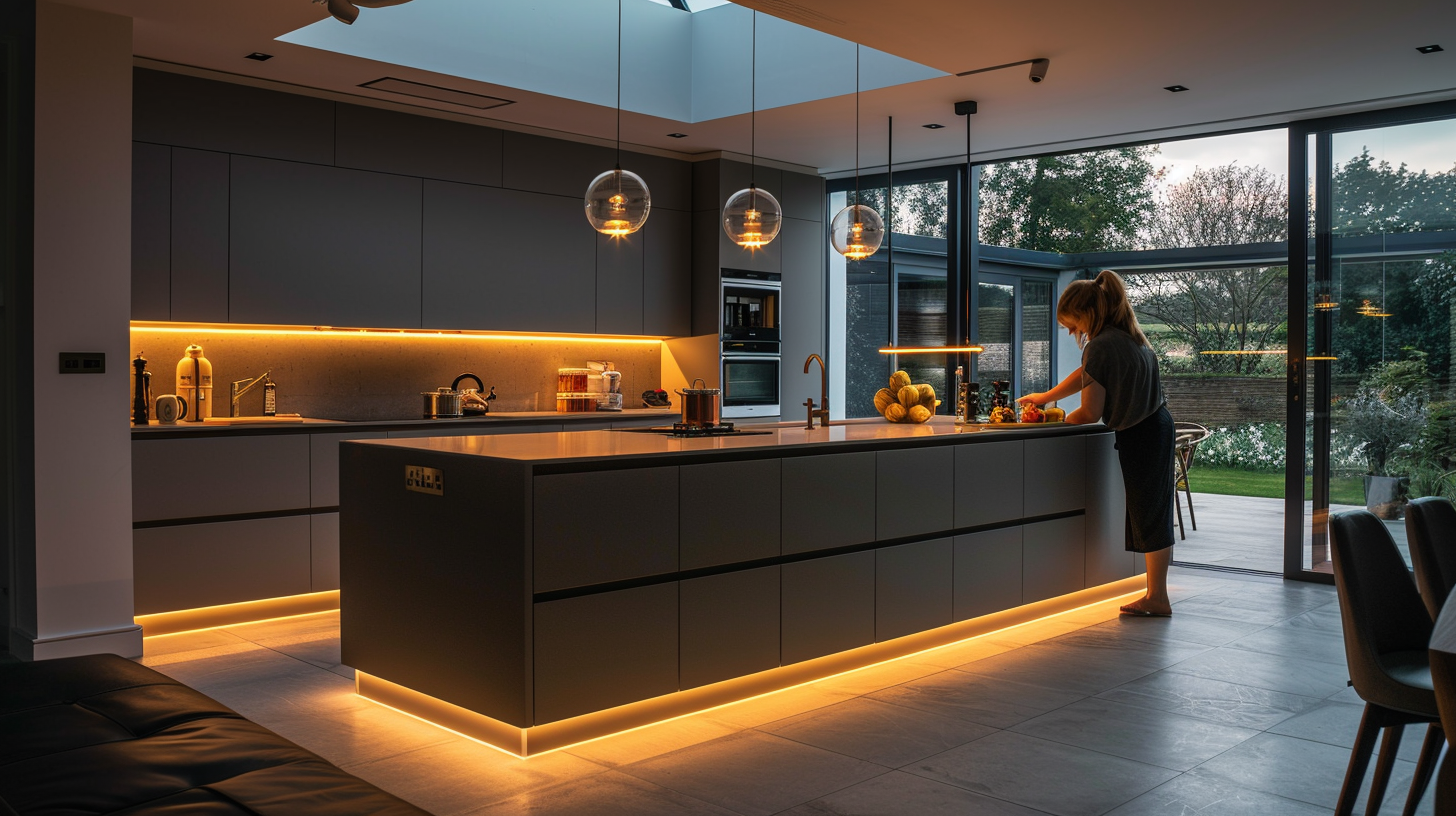
2) Lighting for the Kitchen (Bright + Practical)
Kitchens need clear visibility—especially on worktops.
Best lighting combination:
-
Ambient: ceiling spots or a clean flush ceiling fitting
-
Task: under-cabinet lighting for worktops
-
Accent: pendants over an island or breakfast bar (if you have one)
Pro tip:
Neutral white (around 3500K–4000K) works best for food prep because it looks clean and accurate.
3) Lighting for the Dining Area (Style + Soft Mood)
Dining lighting should feel warm, flattering, and premium.
Best lighting combination:
-
Ambient: a pendant centred over the table (or a small cluster for wider tables)
-
Accent: wall sconces or soft corner lighting
-
Optional: candles or small lamps for extra warmth
Pro tip:
Hang pendants so the bottom is roughly 70–90cm above the table surface (adjust for your space).
4) Lighting for the Bedroom (Soft + Calm)
Bedrooms should be restful—but still functional for reading and getting ready.
Best lighting combination:
-
Ambient: a flush light or soft pendant (avoid harsh glare)
-
Task: bedside wall lights or table lamps
-
Accent: a small lamp in a corner or LED behind a headboard
Pro tip:
Wall lights save bedside table space and instantly make the room feel more “designed”.
5) Lighting for the Bathroom (Safe + Flattering)
Bathrooms need safety ratings and good face lighting.
Best lighting combination:
-
Ambient: IP-rated ceiling light or spots
-
Task: mirror lights or vertical wall lights either side of the mirror
-
Accent: soft niche lighting (if you have shelving)
Pro tip:
For best results at the mirror, avoid a single ceiling light only—it creates shadows on the face.
6) Lighting for Hallways and Stairs (Welcoming + Safe)
These areas are often forgotten—but they set the tone of the home.
Best lighting combination:
-
Ambient: flush ceiling light or spot bar
-
Accent: wall lights along the hallway or stair wall
-
Optional: motion sensor lighting for convenience
Pro tip:
Warm white works best here—it makes the home feel inviting the moment you walk in.
Final Thoughts
Lighting doesn’t need to be intimidating. The simplest rule is: layer your lighting. Use a main light for general brightness, add task lighting where you need it, and finish with accent lighting to create depth and mood.
At Kymra Lighting, we focus on lighting that’s practical, refined, and designed for real UK homes—so you can build a space that looks premium and feels comfortable every day.